The Problem: Manual Grinding on Large Cylinders
Most pressure vessel shops I visit still grind large cylinder bevels by hand. I understand why—when you’re dealing with 600mm, 800mm, or even 1200mm diameter cylinders and dished heads, conventional pipe beveling machines simply don’t fit. So the default becomes angle grinders, carbon arc gouging, and a lot of human suffering.
Last year a pressure vessel manufacturer contacted me with exactly this situation. They were processing large-diameter cylinders—shells and heads over 600mm—and their entire bevel prep workflow was manual. Four workers rotating shifts on a single cylinder. Inconsistent angles. Constant rework after UT inspection. Their welders complained about fit-up. Their inspectors complained about surface finish.
They didn’t need a better grinder. They needed to stop grinding entirely.
Why This Factory Couldn’t Use Conventional Pipe Bevelers
Before calling me, they’d already explored options:
- Split-frame clamshell cutters — designed to clamp around the pipe OD. Works well for pipeline work, but these cylinders were short sections (shells), not long pipe runs. Clamping was impractical and the machines couldn’t reach both ID and OD bevels.
- Lathe-based turning — their cylinders exceeded lathe capacity. Even if they fit, repositioning a 2-ton cylinder on a lathe for each bevel operation was a production bottleneck.
- Plasma/flame beveling — heat input was unacceptable. Their materials included low-alloy steel requiring controlled heat-affected zones per ASME Section VIII.
The real constraint: they needed both inside bevels (ID) and outside bevels (OD) on the same workpiece, and nothing they’d tried could do both without repositioning.
DMM-YG-80 on the Shop Floor
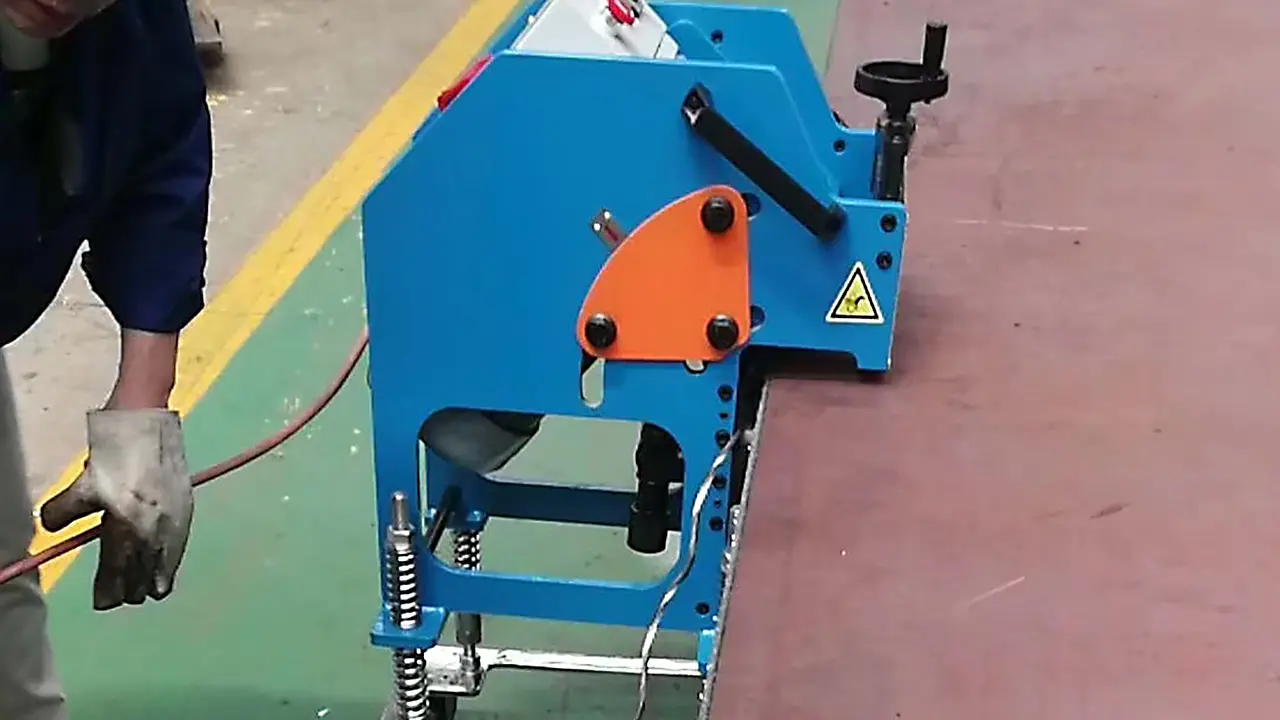
The DMM-YG-80 solved their problem because it doesn’t try to rotate around the pipe or spin the workpiece. Instead, it travels along the pipe surface—the cylinder stays fixed on rollers while the 6000W milling head orbits the circumference at 1.0-1.5 m/min.
For this factory, the key capabilities were:
- 600mm+ diameter coverage — the YG-80 handles any pipe or cylinder over 600mm, which covered their entire product range
- ID and OD beveling — by repositioning the milling head, the same machine processes both inside and outside bevels without moving the workpiece
- Wall thickness up to 100mm — their heaviest cylinders had 80mm walls. The YG-80’s 65mm bevel width per pass handled this comfortably with a two-pass approach on the thickest sections
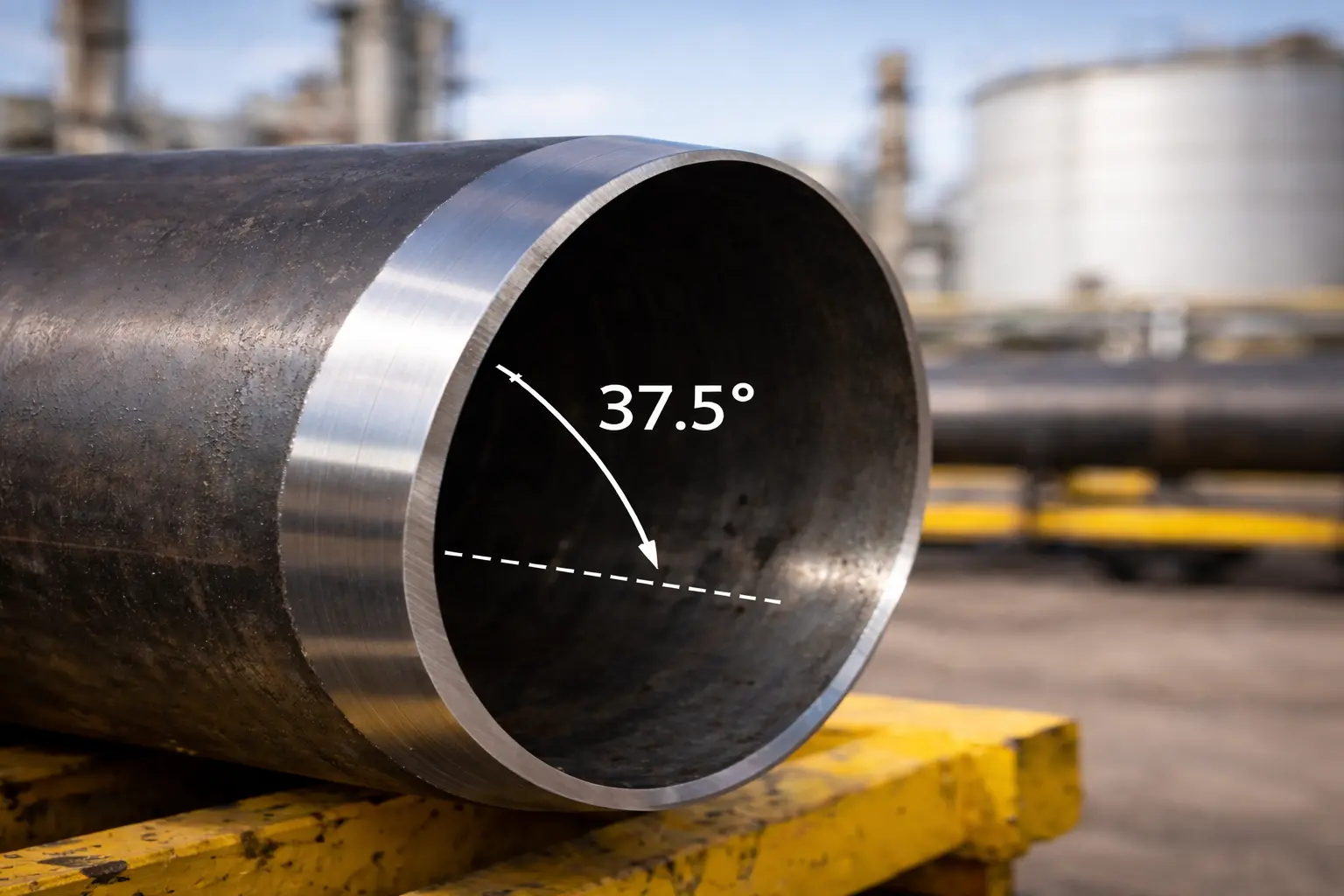
- 25°-70° adjustable angles — they primarily run 30° and 37.5° bevels per their WPS, both within the YG-80’s range
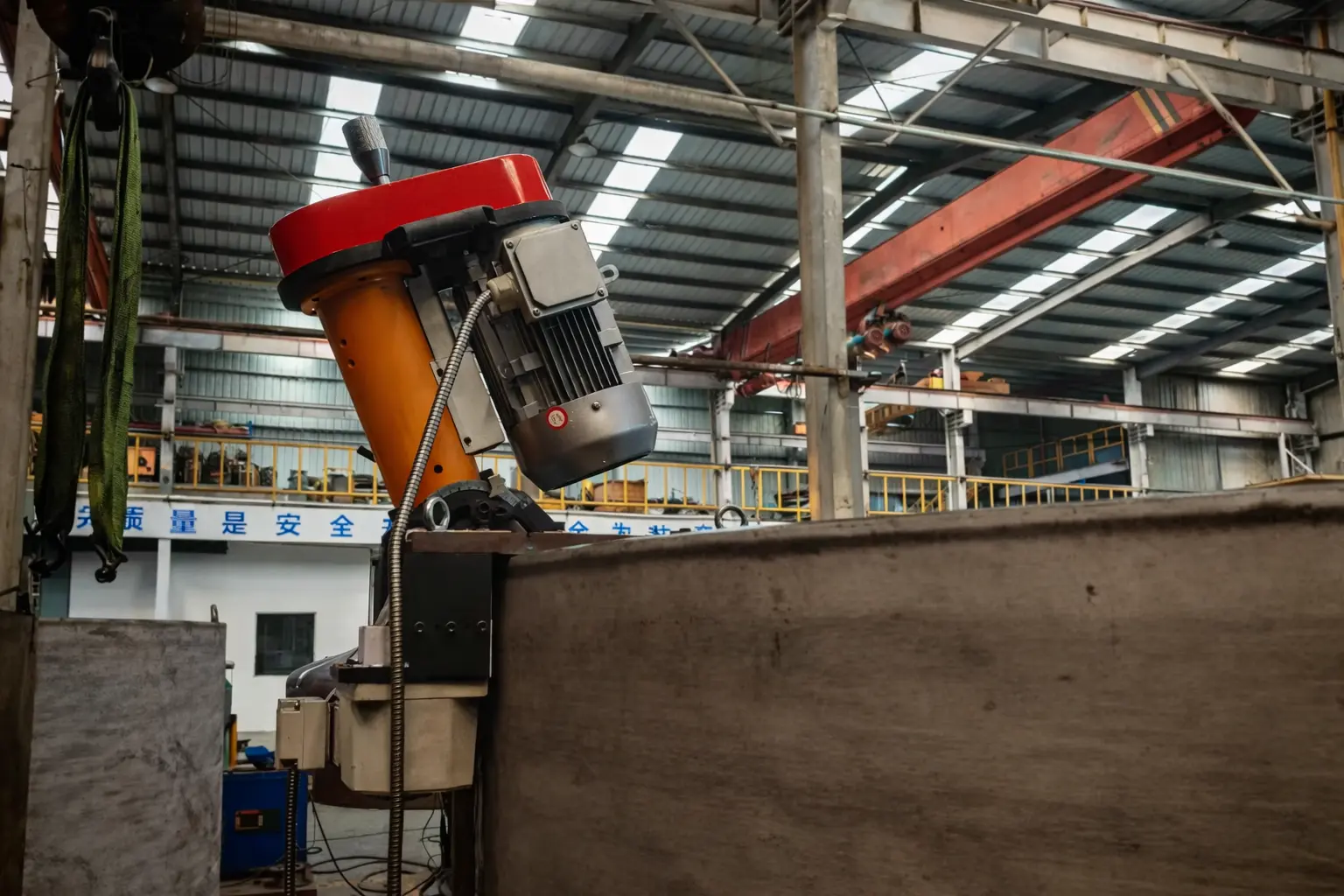
What I Observed During Commissioning
I was on-site for the first week of production. A few things stood out:
Setup time was the learning curve. The machine itself is straightforward—clamp the guide rail, set the angle, engage auto-travel. But the operators needed about 3 days to get comfortable with positioning on curved surfaces. By day 4, setup time dropped from 45 minutes to under 15 minutes per workpiece.
Surface finish eliminated post-processing. The milled bevel came off at Ra 3.2-6.3, which their QC accepted without grinding. This was the single biggest time saver—not the beveling itself, but eliminating the grinding step afterward.
ID beveling was the real win. OD bevels are at least accessible with grinders. ID bevels on large cylinders are miserable manual work—confined space, awkward angles, poor visibility. The YG-80 handles ID and OD with equal ease because the milling head doesn’t care which side of the wall it’s cutting.
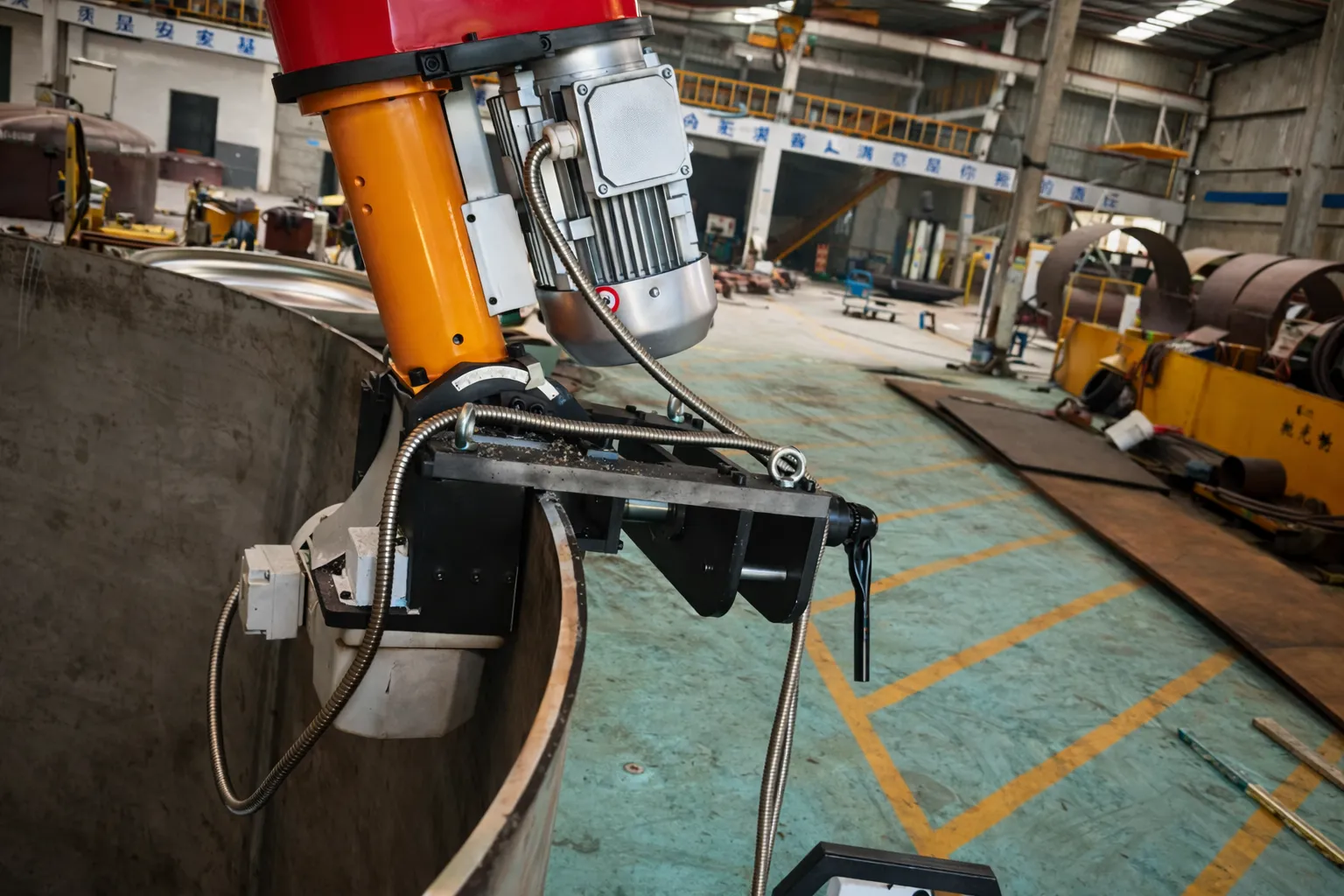
Results: Before vs After
After two months of production, the factory shared their numbers with me:
| Metric | Before (Manual) | After (DMM-YG-80) |
|---|---|---|
| Workers per cylinder | 4 | 1 |
| Bevel prep time (800mm cylinder) | 6-8 hours | 1.5-2 hours |
| Surface finish | Ra 12.5+ (inconsistent) | Ra 3.2-6.3 (consistent) |
| Post-bevel grinding required | Every piece | None |
| UT inspection pass rate | ~75% | 97% |
| Angle consistency | ±3-5° | ±0.5° |
The numbers speak for themselves, but I want to highlight one thing: the 75% to 97% UT pass rate improvement. That’s not just a quality metric—it’s a direct cost reduction. Every failed inspection means rework: grind out the weld, re-bevel, re-weld, re-inspect. At their production volume, the rework reduction alone justified the machine cost within months.
What I Didn’t Expect
The factory also started using the YG-80 on dished heads (ellipsoidal and torispherical). I hadn’t specifically recommended this—the machine is designed for cylindrical surfaces—but the operators found that the guide rail system adapted well to the gentle curvature of large heads. This extended the machine’s utility beyond what we originally scoped.
When DMM-YG-80 Is the Right Choice
Based on this installation and others I’ve done, the DMM-YG-80 fits when:
- Cylinders or pipes over 600mm diameter — this is where conventional bevelers start failing
- Both ID and OD bevels needed — the ability to do both without repositioning the workpiece is unique
- Code-quality surface finish required — ASME, EN 13445, or customer specs that demand milled surfaces
- Wall thickness 6-100mm — the machine’s sweet spot, especially the 40-100mm range where manual grinding is brutal
- Production volume justifies automation — if you’re beveling more than 3-4 large cylinders per week, manual grinding doesn’t make economic sense
The ROI Conversation
I’m direct about this: the DMM-YG-80 is not cheap. It’s a 330kg industrial milling machine with a 6000W motor. But when I sit down with shop managers and calculate what they’re actually spending on manual grinding—labor, consumables, rework, inspection failures—the payback period is usually shorter than they expect.
For this factory, the math was straightforward: 4 workers × 8 hours per cylinder, replaced by 1 operator × 2 hours. Even before counting quality improvements and rework reduction, the labor savings were significant.
When It Isn’t
I don’t recommend the DMM-YG-80 for every situation:
- Small diameter pipes (<600mm) — use an ISE internal mount beveler or split-frame cutter instead. They’re faster and cheaper for standard pipe sizes.
- One-off jobs — if you bevel one large cylinder per month, the capital investment doesn’t make sense. Consider outsourcing to a shop that has one.
- Thin wall (<6mm) — the YG-80 is built for heavy-wall work. For thin-wall pipe, lighter machines are more appropriate and less likely to distort the workpiece.
- Field work with limited power — the machine requires 380V three-phase power and weighs 330kg. This is a shop machine, not a field tool.
Next Steps
If you’re processing large-diameter cylinders, heads, or pipes and still grinding bevels manually, I’d like to hear about your specific situation:
- What diameters and wall thicknesses are you working with?
- Do you need both ID and OD bevels, or just one?
- What’s your weekly volume of large-diameter bevel prep?
- What codes/specs do your bevels need to meet?
Send me these details and I’ll tell you whether the DMM-YG-80 fits—or if another solution makes more sense.
Related reading:
- Pipe Bevel Angles & Code Requirements — Understanding angle specs for ASME, AWS, and EN standards
- DMM-YG Series product page — Full specifications and model comparison
- View the DMM-YG datasheet — Detailed technical specifications
Based on an actual installation at a pressure vessel manufacturing facility. Production data shared with customer permission; company name withheld per their request.