Why Buying from China Isn’t What You Think
I’ll start with the uncomfortable truth: most buyers who contact Chinese suppliers for the first time are doing it wrong. Not because they’re stupid—because the advice they’ve read is written by people who’ve never actually sold or manufactured industrial equipment.
Every “sourcing from China” guide on the internet tells you the same thing: go on Alibaba, request quotes from 10 suppliers, pick the cheapest one, negotiate 20% off, and order a sample. That process works beautifully for LED lights and silicone phone cases. For a pipe beveling machine that costs $5,000–$50,000 and needs to produce code-compliant bevels on day one? That process will cost you money, time, and possibly your customer relationships.
I know this because I’m on the other side of those inquiries. I run a beveling machine factory in China. I see the emails. I see buyers who clearly copy-pasted the same RFQ to 30 suppliers. I see the ones who ask nothing about engineering and everything about price. And I see what happens six months later when the machine they bought from the cheapest supplier can’t hold tolerance.
This guide is the one I wish every buyer would read before sending their first email. It won’t tell you how to squeeze the lowest price. It will tell you how to get the right machine, from the right manufacturer, without the disasters I’ve watched happen dozens of times.
The Three Types of Chinese Suppliers
Before you contact anyone, understand who you’re actually talking to. In China’s beveling machine market, there are three fundamentally different types of “suppliers,” and they all look identical on Alibaba.
1. Actual Manufacturers (工厂)
These companies design, machine, assemble, and test beveling equipment in their own factory. They control the engineering. They control the quality. They can customize because they understand what they’re building.
How to identify them: They have machine tools (CNC lathes, milling centers) on their factory floor—not just an assembly line. They can discuss engineering details, not just price. They have R&D staff, not just salespeople.
We’re one of these. I’m transparent about my bias. But the point stands: a manufacturer can do things a trading company physically cannot—like modify a cutter geometry for your specific material, or build a machine for a non-standard pipe diameter.
2. Trading Companies (贸易公司)
These companies have offices, websites, and excellent English. They do not have factories. They find a manufacturer, add 15–30% markup, and present themselves as the source. Some are upfront about this. Most are not.
The problem isn’t the markup. The problem is that when something goes wrong—wrong tolerance, delayed delivery, defective part—the trading company can’t fix it. They can only relay your complaint to the factory, which has no direct relationship with you and no particular motivation to prioritize your issue.
3. Assemblers (组装厂)
These are the most dangerous category. They buy components from multiple sources—motors from one supplier, frames from another, tooling from a third—and bolt them together. They call themselves “manufacturers” because technically, assembly happened in their facility.
The result: Machines that look correct in photos but have mismatched component tolerances, inconsistent material quality, and no coherent engineering behind the design. I’ve had customers bring me competitor machines for repair that had three different grades of steel in the same frame because the assembler bought whatever was cheapest that month.
Your first job as a buyer is figuring out which type you’re talking to. Everything else follows from that.
Step 1: Find the Actual Manufacturer
Skip Alibaba (or use it differently)
I’ll probably get criticized for this, but Alibaba is a terrible way to find a beveling machine manufacturer. It’s an excellent way to find trading companies who pay for top placement. The actual manufacturers are often on page 3, with worse product photos and no “Gold Supplier” badge, because they spend their money on CNC machines instead of digital marketing.
If you use Alibaba at all, use it as a directory, not a marketplace. Find company names, then research them independently.
Better approaches
-
Industry exhibitions. CIMT (China International Machine Tool Show), Essen Welding Fair, FABTECH. At an exhibition, you can see real machines, meet real engineers, and watch real demonstrations. You can also see which companies brought actual equipment versus which brought only brochures and a TV screen.
-
Direct search with specific terms. Don’t search “beveling machine China.” Search “pipe beveling machine manufacturer Shenzhen” or “OD mount beveler factory Jiangsu.” Geographic specificity filters out most trading companies.
-
Industry referrals. Ask your welding equipment distributor, your pipe supplier, or other fabricators in your network who they’ve bought from. Word-of-mouth is the highest signal-to-noise ratio channel that exists.
-
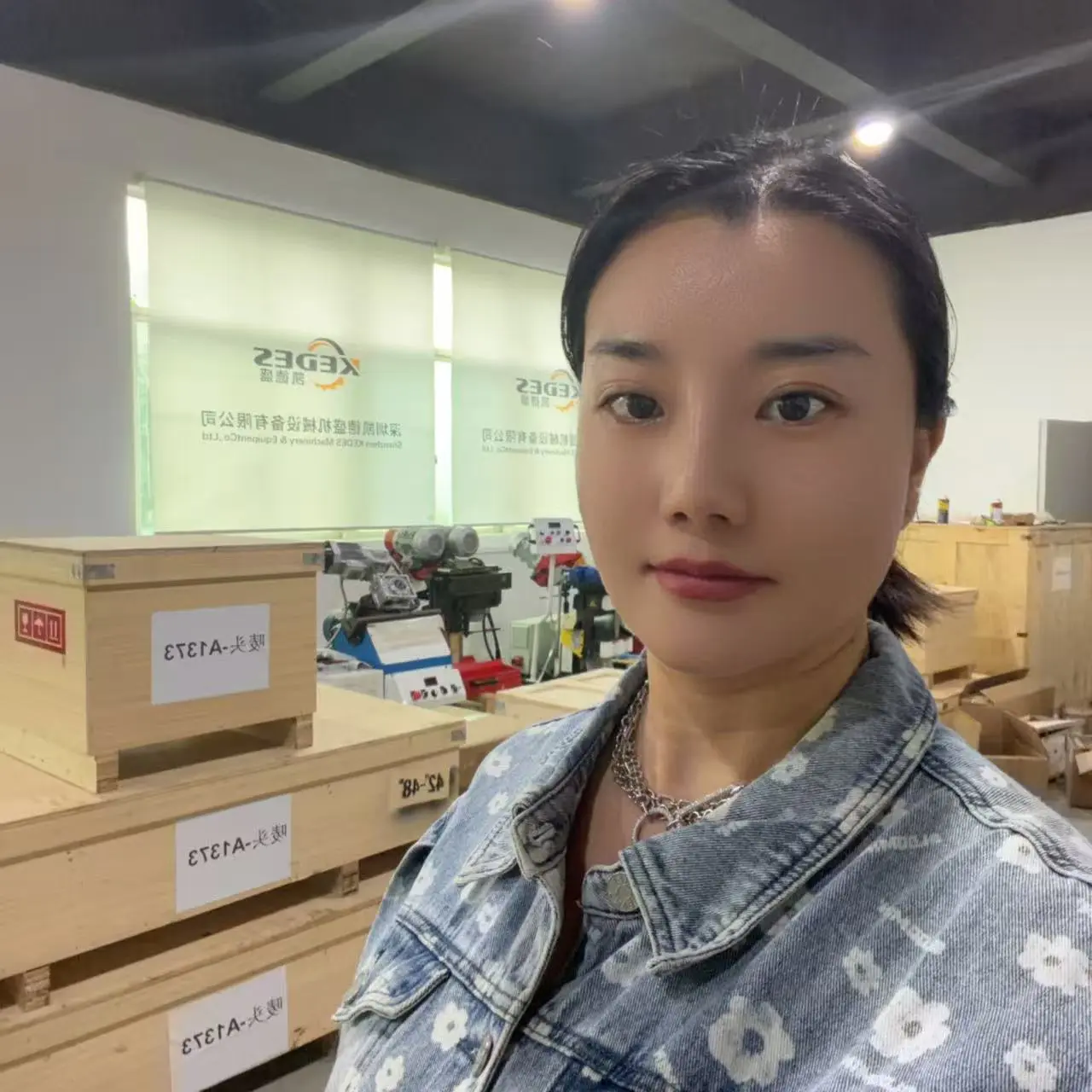
Company websites. A real manufacturer’s website will show their factory, their engineering team, their production process—not just product photos from a catalog. Our own site exists precisely because we want buyers to see who we actually are before they contact us.
Step 2: Verify Before You Negotiate
Do not discuss price until you’ve verified three things. I’m serious about this—the order matters.
Verify they actually manufacture
Ask for:
- Factory video tour (not a produced marketing video—a real walkthrough showing their machine tools, assembly area, and testing equipment)
- Machine tool list — what CNC equipment do they own? A manufacturer of beveling machines should have at minimum: CNC lathes, milling centers, and a precision grinding machine
- Business license (营业执照) — look for “manufacturing” (制造/生产) in the business scope, not just “sales” (销售)
- ISO 9001 certificate — verify the certificate number independently at the issuing body’s website
Verify they’ve exported to your market
Ask for:
- Export packing list examples — shows they understand international shipping requirements
- Reference customers in your region — a manufacturer with 50+ country coverage can usually provide references. If they can’t provide a single reference, ask why
- CE/certification documentation — for European markets, a CE Declaration of Conformity is legally required, not optional. Ask for the actual test reports, not just the certificate
Verify technical capability
Ask them a technical question that a trading company can’t answer:
- “What’s the maximum wall thickness your ISE-type machine can handle on P91 chrome-moly without carbide chipping?”
- “Can you modify the cutter angle from 37.5° to 30° for our J-prep specification?”
- “What spindle bearing do you use, and what’s the expected service life at full load?”
A real manufacturer will answer these within 24 hours. A trading company will need 3–5 days because they’re forwarding your question to the actual factory.
Step 3: Understand MOQ and Pricing Structure
MOQ reality
For standard beveling machine models, most Chinese manufacturers (including us) have MOQ of 1 unit. This is not phone cases. Nobody is asking you to buy 500 machines.
However, there are legitimate reasons MOQ matters:
- Customized machines (non-standard diameter, special tooling, custom voltage): MOQ may be 2–5 units because the manufacturer needs to set up production for your specification
- OEM/private label: MOQ is typically 10–20 units because they’re creating custom branding, packaging, and documentation
- Spare parts and tooling: Usually no MOQ, but shipping cost per piece is high for small orders. Bundle your tooling order with the machine purchase
Pricing structure (what actually affects the number)
| Factor | Impact on Price | What Buyers Miss |
|---|---|---|
| Machine model/size | 60–70% of cost | Larger machines cost more—obvious, but many buyers compare prices across different size ranges |
| Drive type | 10–15% of cost | Pneumatic costs more than electric. Hydraulic costs more than pneumatic. CNC costs the most |
| Material of construction | 5–10% of cost | Hardened tool steel body vs. aluminum. Carbide tooling vs. HSS |
| Certification | 3–5% of cost | CE testing, documentation, and compliance aren’t free |
| Customization | 5–20% of cost | Any non-standard specification adds engineering time |
| Order quantity | 5–15% discount at 5+ units | Realistic bulk discount range. Anyone offering 30%+ discount for quantity is cutting quality |
The price red flags
If a quote is 40%+ below other manufacturers for the same specification, something is wrong. Either:
- They’re quoting a smaller/weaker machine than what you specified
- They’re using inferior materials (cast iron frame instead of machined steel, HSS tooling instead of carbide)
- They’re an assembler, not a manufacturer
- They’re planning to make up the margin on replacement parts (which they’ll price at 3x market rate)
I’ve lost orders to suppliers quoting 50% below our price. I’ve also won orders from the same buyers two years later, when they came back after the cheap machine failed. The second order always costs more than if they’d bought correctly the first time.
Step 4: Lead Time — What the Quote Doesn’t Tell You
Standard lead times
For most Chinese beveling machine manufacturers, realistic production lead times are:
| Order Type | Quoted Lead Time | Actual Lead Time |
|---|---|---|
| Stock models (if available) | 3–7 days | 3–7 days |
| Standard models, production | 15–30 days | 20–40 days |
| Customized models | 30–45 days | 35–60 days |
| OEM/private label | 45–60 days | 50–75 days |
Notice the gap between “quoted” and “actual.” This isn’t dishonesty—it’s reality. Production schedules shift, material supply varies, and quality inspection sometimes catches issues that require rework. A manufacturer who gives you a realistic timeline is more trustworthy than one who promises 7 days for a custom machine.
What adds time (that nobody mentions)
- Chinese New Year (January/February): Add 3–4 weeks. The entire manufacturing sector effectively shuts down for 2–3 weeks, and it takes another 1–2 weeks to return to full capacity. Plan accordingly.
- National holidays (October Golden Week, Mid-Autumn): Add 1–2 weeks.
- Pre-shipment inspection: If you require third-party inspection (SGS, Bureau Veritas), schedule it at least 2 weeks before your shipping deadline.
- Export documentation: CE declaration, fumigation certificate, certificate of origin—each adds 2–5 business days.
- Shipping itself: Sea freight from China to Europe is 25–35 days. To the US East Coast, 30–40 days. To Southeast Asia, 7–14 days. Air freight cuts this to 5–7 days but costs 5–8x more.
How to manage lead time effectively
- Order early. If you need a machine by September, start the process in May—not July.
- Ask for production photos at milestones. Frame machining complete, assembly complete, testing complete. This keeps you informed and keeps the factory accountable.
- Pay the deposit promptly. Production doesn’t start until the deposit clears. Every day you delay payment is a day added to delivery.
- Communicate your hard deadline upfront. If you have a project installation date that cannot move, tell the manufacturer on day one. We can plan around hard deadlines—but only if we know about them.
Step 5: Quality Control — The Part Everyone Skips
This is where most international buyers make their biggest mistake. They spend weeks negotiating a 3% price reduction, then spend zero time defining quality requirements. The 3% you saved will evaporate with one quality issue.
Define acceptance criteria before ordering
For a beveling machine, your acceptance criteria should include:
- Bevel angle tolerance: ±0.5° for code work, ±1° for general industrial
- Surface finish: Ra 3.2μm or Ra 6.3μm—specify which
- Runout (concentricity): ≤0.1mm for precision work
- Motor performance: Verify rated power under load, not just nameplate
- Safety features: Emergency stop, overload protection, guarding
Put these in writing. Attach them to the purchase order. A quality standard that exists only in your head is not a quality standard.
Pre-shipment inspection options
| Method | Cost | Effectiveness |
|---|---|---|
| Factory self-inspection report | Free | Low — fox guarding the henhouse |
| Video inspection | Free–$200 | Medium — you see the machine run, but can’t measure tolerances |
| Third-party inspection (SGS, BV) | $300–$800 | High — independent verification against your spec |
| Your own inspector visits | $1,500–$3,000 (travel) | Highest — but usually not cost-effective for single machines |
My recommendation: For orders under $10,000, video inspection plus a factory self-inspection report with measured values is sufficient—if you’ve already verified the manufacturer is legitimate. For orders over $10,000 or first-time purchases from a new supplier, pay for third-party inspection. The $500 cost is insurance against a $10,000+ mistake.
What to inspect
- Run the machine on a test pipe matching your diameter and wall thickness
- Measure the bevel angle with a digital protractor (not the machine’s dial—the actual bevel)
- Check surface finish with a roughness gauge
- Verify all accessories and spare parts match the packing list
- Document serial numbers for warranty tracking
Step 6: Shipping and Incoterms
Choose the right Incoterm
For most beveling machine purchases, you’ll encounter three options:
| Incoterm | What It Means | Who Should Use It |
|---|---|---|
| EXW (Ex Works) | You arrange everything from the factory gate | Experienced importers with their own freight forwarder |
| FOB (Free On Board) | Manufacturer handles delivery to the port and export clearance | Most common, good balance of cost and convenience |
| CIF (Cost, Insurance, Freight) | Manufacturer arranges shipping to your port, including insurance | First-time importers, or when you want one total price |
My advice for first-time buyers: use FOB or CIF. EXW saves a few hundred dollars but puts the entire logistics burden on you, including Chinese domestic transport and export customs—which require Chinese-language documentation and relationships with local freight forwarders.
Packing matters more than you think
A beveling machine is precision equipment. It should be packed in a fumigated wooden crate (required for most countries under ISPM 15), with foam or vibration-dampening material protecting the spindle, motor, and tooling.
Ask for packing photos before shipment. If your $8,000 machine arrives in a cardboard box with newspaper for padding—and yes, I’ve heard of this happening with other suppliers—the precision you paid for was destroyed somewhere in the Pacific Ocean.
Payment terms
Standard payment terms in China’s equipment manufacturing sector:
- 30% T/T deposit to start production
- 70% T/T balance before shipment (against inspection report/photos)
- Alternative: 100% irrevocable L/C at sight (more protection for buyer, more paperwork for both sides)
Red flag: Any supplier asking for 100% payment upfront via T/T for a first order. Legitimate manufacturers understand that trust is built over time. We use 30/70 terms for new customers and more flexible terms for established relationships.
The Five Mistakes That Cost Buyers the Most
I’ve been in this industry for over 15 years. These are the patterns I see repeatedly:
1. Choosing on price alone
The buyer gets five quotes, picks the lowest, and saves $2,000 upfront. Twelve months later, the machine needs $1,500 in replacement parts that are proprietary and overpriced—or worse, unavailable because the supplier disappeared.
Buy from a manufacturer who’ll still be there in five years. Ask about spare parts availability and pricing before you buy the machine.
2. Not specifying the application
“I need a pipe beveling machine” is not a specification. What pipe diameter? What wall thickness? What material? What bevel angle? What code? Without these details, any quote you receive is meaningless—and the supplier who gives you the lowest price is probably quoting the smallest machine that technically fits the word “beveling.”
3. Ignoring after-sales support
Your machine will eventually need a new cutter, a replacement bearing, or troubleshooting help. Before you buy, ask:
- How quickly can you ship replacement tooling?
- Do you have a technical support contact available in my time zone?
- What’s covered under warranty, and for how long?
We provide 24/7 WhatsApp support and keep common spare parts in stock for immediate dispatch. Not every manufacturer does. Find out before you need it.
4. Rushing the timeline
Buyer sends RFQ on March 1, wants delivery by March 30. No manufacturer can produce a quality machine in 30 days unless it’s in stock. What happens instead: the supplier agrees (because they want the order), then either ships late or ships a machine that wasn’t fully tested.
Give yourself 2–3 months from initial contact to delivery. This allows time for proper quotation, engineering review, production, inspection, and shipping.
5. Not visiting (or virtually visiting) the factory
I understand that flying to China for a $10,000 purchase doesn’t always make economic sense. But a video call costs nothing. Ask for a live factory tour over WeChat, WhatsApp, or Zoom. Watch them walk through the production floor. See where your machine is being built.
If a supplier refuses to show you their factory live, that tells you everything you need to know.
When You Shouldn’t Buy from China
I’m a Chinese manufacturer telling you this: buying from China isn’t always the right decision. Here’s when it’s not:
- You need a machine this week. Chinese manufacturing plus international shipping means 4–8 weeks minimum. If you need equipment immediately, buy locally or from a distributor who carries stock.
- Your total order is under $1,000. Shipping costs will eat your savings. Buy from a local distributor instead.
- You need a machine that exactly copies a specific European brand. We design our own machines. If you need a literal Protem or Wachs replacement part, buy from Protem or Wachs. If you need a machine that does the same job at a better price point, that’s a different conversation.
- You have zero tolerance for communication gaps. International business involves time zone differences, occasional language barriers, and cultural differences in business communication. If that stresses you out, work with a local supplier.
I’d rather tell you this upfront than have you discover it after a frustrating purchasing experience. Honest business means knowing when you’re not the right fit.
The Bottom Line
Buying a beveling machine from China isn’t complicated—but it requires a different approach than buying domestically. The process that works:
- Find the manufacturer — not the trading company, not the assembler
- Verify before you negotiate — factory tour, technical Q&A, reference check
- Specify your application completely — pipe size, wall thickness, material, code, bevel type
- Define quality criteria in writing — before the purchase order, not after the machine arrives
- Allow adequate lead time — 2–3 months from first contact to delivery
- Inspect before shipping — video at minimum, third-party for high-value orders
The price advantage of buying directly from a Chinese manufacturer is real—typically 30–50% below equivalent European or American branded machines. But that advantage only materializes if you buy from the right supplier. Buy from the wrong one, and you’ll spend more in rework, replacement, and frustration than you ever saved on the purchase price.
Here’s what I can offer:
→ See our full product range: Browse our pipe beveling machines, plate beveling machines, pipe cutting machines, and pipe facing machines
→ Get a factory-direct quote: Contact us with your pipe specs and application details—I’ll respond with a specific machine recommendation and pricing within 24 hours
→ Read more about who we are: Why buy direct from Kedes — factory photos, certifications, and our export track record
→ Already comparing machines? Read our honest selection guide to understand which type you actually need before you compare prices
Written from the perspective of a Chinese beveling machine manufacturer with 15+ years of export experience across 50+ countries. I’m not a neutral party—I obviously want you to buy from us. But I’ve built this business on the principle that an informed buyer makes a better long-term customer than a confused one. If this guide helps you buy from a competitor because they’re genuinely the better fit, I’ll survive. If it helps you avoid the scams and the junk, that’s good for the entire industry.